图像语义分割 FCN
import tensorflow as tf import matplotlib.pyplot as plt import numpy as np import os import glob
打印Tensorflow版本
1 | print('Tensorflow version:{}'.format(tf.__version__)) |
打印是否支持GPU加速
1 | print(tf.test.is_gpu_available()) |
获取图片路径
1 | images = glob.glob('./images/*.jpg') |
获取标注图片的路径
1 | anno = glob.glob('./annotations/trimaps/*.png') |
图片和标注图片做乱序
1 | np.random.seed(2023) |
img = tf.squeeze(img)#自动把通道数为1的压缩成2二维列表
图片和标注图片Dataset
1 | dataset = tf.data.Dataset.from_tensor_slices((images,anno)) |
划分数据集
1 | test_count = int(len(images)*0.2) |
图片和标注图片的读取函数
1 | def read_jpg(path): |
1 | def read_png(path): |
1 | def normal_img(input_images,input_anno): |
1 | def load_images(input_images_path,input_anno_path): |
Dataset加载图片读取函数
1 | data_train = data_train.map(load_images,num_parallel_calls=tf.data.experimental.AUTOTUNE) |
设置BATCH_SIZE
1 | BATCH_SIZE = 32 |
对Dataset设置repeat、shuffle、batch
1 | data_train = data_train.repeat().shuffle(100).batch(BATCH_SIZE)#之前路径乱序了,这里可以小点 |
查看Dataset中图片与标注图片
1 | for img,anno in data_train.take(1): |
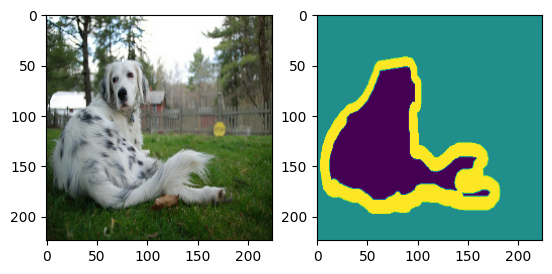
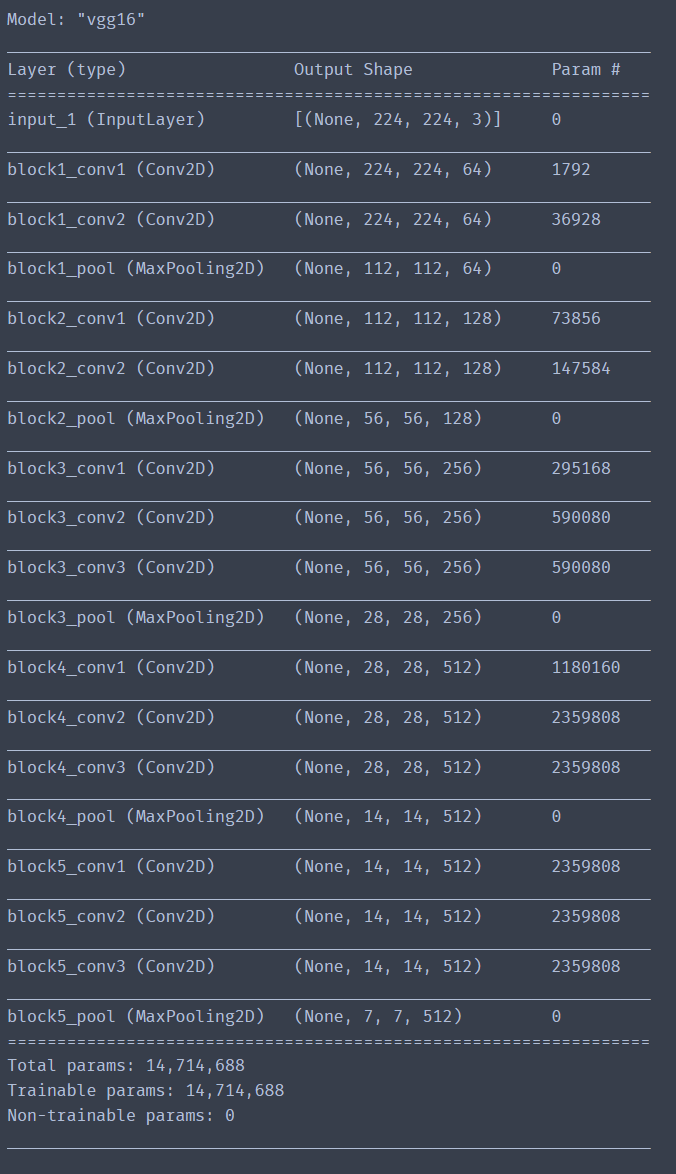
加载VGG16预训练模型
1 | conv_base = tf.keras.applications.VGG16(weights='imagenet', |
获取中间层的输出值
1 | layer_names = [ |
1 | layers_output = [conv_base.get_layer(layer_name).output for layer_name in layer_names] |
创建含有多个输出的子模型
1 | multi_out_model = tf.keras.models.Model(inputs=conv_base.input, |
设置模型为不可训练(保留训练权重)
1 | multi_out_model.trainable = False |
input模型得到输出
1 | inputs = tf.keras.layers.Input(shape=(224,224,3)) |
out_block5_conv3.shape,out_block4_conv3.shape,out_block3_conv3.shape,out.shape (TensorShape([None, 14, 14, 512]), TensorShape([None, 28, 28, 512]), TensorShape([None, 56, 56, 256]), TensorShape([None, 7, 7, 512]))
上采样 Upsampling 反卷积(转置卷积)
1 | x1 = tf.keras.layers.Conv2DTranspose(filters=512, |
TensorShape([None, 14, 14, 512])
1 | x2 = tf.add(x1,out_block5_conv3)#tensor元素相加 |
TensorShape([None, 28, 28, 512])
1 | x3 = tf.add(x2,out_block4_conv3)#tensor元素相加 |
TensorShape([None, 56, 56, 256])
1 | x4 = tf.add(x3,out_block3_conv3)#tensor元素相加 |
TensorShape([None, 112, 112, 128])
1 | prediction = tf.keras.layers.Conv2DTranspose(filters=3,#3种分类 |
TensorShape([None, 224, 224, 3])
设置模型的inputs与outputs
1 | model = tf.keras.models.Model( |
配置模型
1 | model.compile( |
模型训练
1 | history = model.fit(data_train, |
绘制模型训练过程中train_loss与test_loss变化
1 | loss = history.history['loss'] |
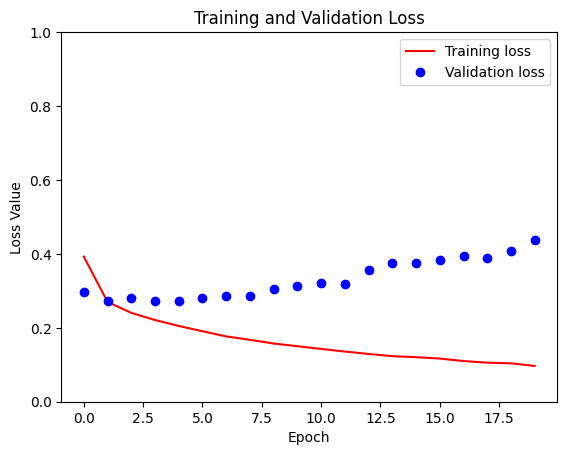
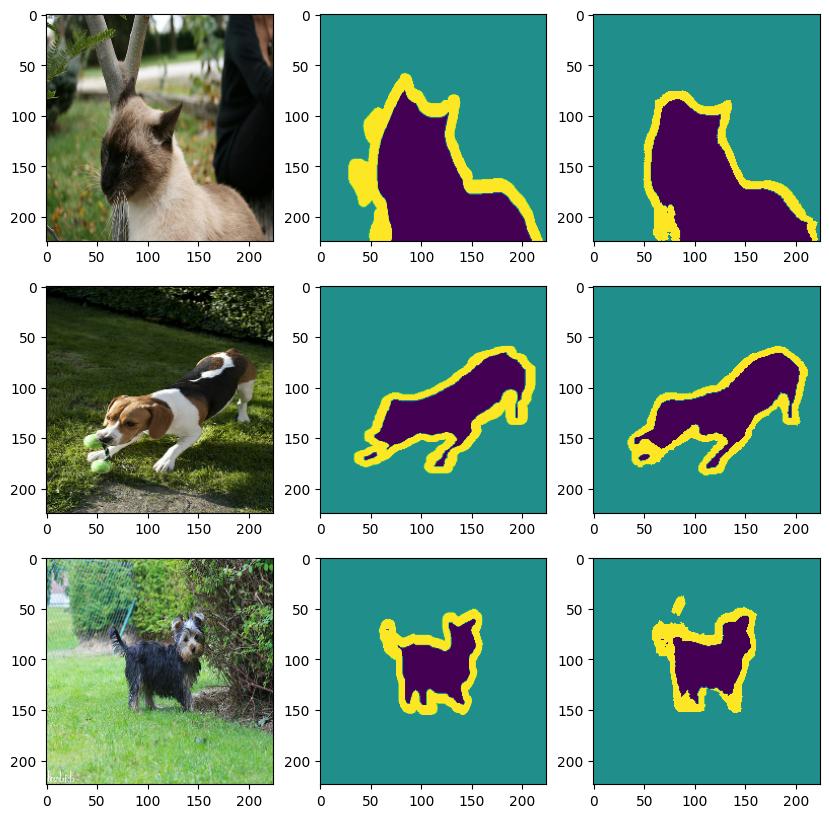
绘制原图片、标注图片、预测图片
1 | num = 3 |
本博客所有文章除特别声明外,均采用 CC BY-NC-SA 4.0 许可协议。转载请注明来源 YuKiFuHaNeの博客!
相关推荐

2023-07-14
图像语义分割 FCN 概念
输入和输出网络的输入可以为任意尺寸的彩色图像; 输出 与输入尺 寸相同,通道数为:n(目标类别数)+1(背景)。 全卷积网络在CNN卷积部分不用全连接而是替换成卷积的目的 是允许输入的图片为超过某一尺寸的任意大小。 上采样 Upsampling由于在卷积过程中,我们的特征图像变得很小(比如长宽变 为原图像的1/32),为了得到原图像大小的稠密像素预测, 我们需要进行上采样。 容易想到三种方式,分别对应最大池化、平均池化和卷积操 作的反过来使用。 插值法 反池化 反卷积(转置卷积) 12345678910111213141516171819tf.keras.layers.Conv2DTranspose( filters, kernel_size, strides=(1, 1), padding='valid', output_padding=None, data_format=None, dilation_rate=(1, 1), activation=None, use_bias=T...

2023-07-14
使用预训练网络
import tensorflow as tf import matplotlib.pyplot as plt %matplotlib inline import numpy as np import glob import os 打印Tensorflow版本1print('Tensorflow version:{}'.format(tf.__version__)) 打印是否支持GPU加速1print(tf.test.is_gpu_available()) 设置keras与layers(方便调用)12keras = tf.keraslayers = tf.keras.layers 读取train、test数据集图片路径12train_image_path = glob.glob('./dc_2000/train/*.jpg')test_image_path = glob.glob('./dc_2000/test/*.jpg') 将路径的图片名称提取出来12train_image_label ...

2023-07-14
LinkNet 图像语义分割
import tensorflow as tf from tensorflow import keras import numpy as np import os %matplotlib inline import matplotlib.pyplot as plt import glob 查看Tensorflow版本1tf.__version__ 仅在需要时申请显存空间程序初始运行时消耗 很少的显存,随着程序的运行而动态申请显存;GPU 的显存使用策略设置为 “仅在需要时申请显存空间”) 123gpus = tf.config.list_physical_devices(device_type='GPU')for gpu in gpus: tf.config.experimental.set_memory_growth(device=gpu, enable=True) glob读取路径训练数据12img = glob.glob('E:images/leftImg8bit/train/*/*.png') # tf.io.glob...

2023-07-14
城市街景语义分割 UNET
import tensorflow as tf import numpy as np import os %matplotlib inline import matplotlib.pyplot as plt import glob 获取img、label路径12img = glob.glob('./images/leftImg8bit/train/*/*.png')#tf.io.glob.globlabel = glob.glob('./images/gtFine/train/*/*_gtFine_labelIds.png') 获取img_val、label_val路径12img_val = glob.glob('./images/leftImg8bit/val/*/*.png')label_val = glob.glob('./images/gtFine/val/*/*_gtFine_labelIds.png') 对训练路径进行乱序(减轻shuffle)123index = np.random...

2023-07-14
叶子实例分类
import tensorflow as tf from tensorflow import keras from tensorflow.keras import layers import numpy as np import pandas as pd import matplotlib.pyplot as plt %matplotlib inlinefrom sklearn.model_selection import train_test_split conda install scikit-learn pandas读取树叶csv纹理数据1data = pd.read_csv('./leaf/train.csv') 查看每列的数据类型1data.info() 12345<class 'pandas.core.frame.DataFrame'>RangeIndex: 990 entries, 0 to 989Columns: 194 entries, id to texture64dtypes: float6...
2023-07-14
卫星图像识别
glob的使用import glob 12345678910all_image_path = glob.glob('./*/*jpg') #将遍历该文件夹下的所有文件夹中的以.jpg结尾的文件all_image_path['.\\airplane\\airplane_632.jpg', '.\\lake\\lake_056.jpg', '.\\lake\\lake_584.jpg', '.\\lake\\lake_334.jpg', '.\\airplane\\airplane_684.jpg', '.\\airplane\\airplane_079.jpg', '.\\airplane\\airplane_294.jpg'] 图片位置的乱序123#做乱序,shuffleimport randomrandom.shuffle(all_image_path) 图片 Label与Index直接转换12label_to_...