基本去噪自编码器的实现
import tensorflow as tf import matplotlib.pyplot as plt import numpy as np
查看tensorflow版本
1 | tf.__version__ |
导入mnist数据集
1 | (x_train,_),(x_test,_) = tf.keras.datasets.mnist.load_data() |
查看数据维度
1 | x_train.shape,x_test.shape |
对数据进行reshape 28*28->784
1 | x_train = x_train.reshape(x_train.shape[0], -1) |
数据归一化
1 | x_train = tf.cast(x_train,tf.float32)/255 |
噪声的添加
1 | factor = 0.5 #增加噪声多少 |
数据范围规定
1 | x_train_noise = np.clip(x_train_noise,0.,1.)#加噪后数值可能会不在0~1之间将范围规定到之中,大于1变成1小于0变成00 |
查看加噪后的图片
1 | n=10 |

构建模型
1 | input_size = 784 |
查看模型数据流动
1 | tf.keras.utils.plot_model(model,show_shapes=True)#可视化 |
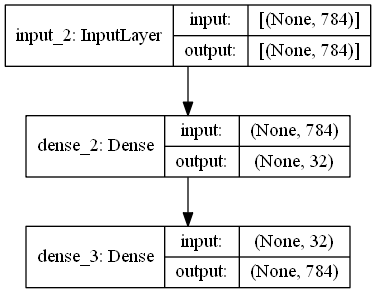
模型配置
1 | model.compile(optimizer=tf.keras.optimizers.Adam(0.001), |
模型训练
1 | model.fit(x_train_noise, x_train, |
模型测试
编码
1 | encode = tf.keras.Model(inputs=input,outputs=en) |
model.layers[-1].name
解码
1 | input_de = tf.keras.layers.Input(shape=(hidden_size,)) |
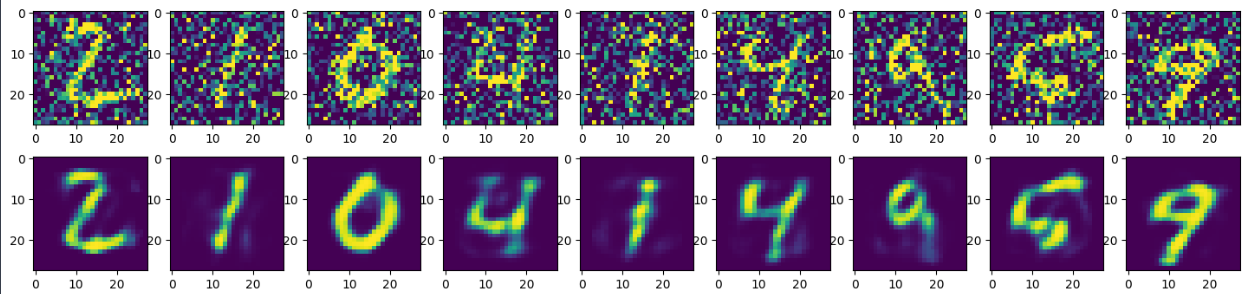
输出
1 | encode_test = encode(x_test_noise)#TensorShape([10000, 32]) |
本博客所有文章除特别声明外,均采用 CC BY-NC-SA 4.0 许可协议。转载请注明来源 YuKiFuHaNeの博客!
相关推荐

2023-07-14
卷积去噪自编码器的实现
import tensorflow as tf import matplotlib.pyplot as plt import numpy as np 查看tensorflow版本1tf.__version__ 导入mnist数据集1(x_train,_),(x_test,_) = tf.keras.datasets.mnist.load_data() 查看数据维度1x_train.shape,x_test.shape 对数据最后一个维度进行扩展12x_train = np.expand_dims(x_train, -1)x_test = np.expand_dims(x_test, -1) x_train.shape,x_test.shape 1((60000, 28, 28, 1), (10000, 28, 28, 1)) 数据归一化12x_train = tf.cast(x_train,tf.float32)/255x_test = tf.cast(x_test,tf.float32)/255 噪声的添加123factor = 0.5 #增加噪声多少x_train...

2023-07-14
变分自编码器
import tensorflow as tf import numpy as np import matplotlib.pyplot as plt %matplotlib inline 加载手写数据集1(train_image,_),_ = tf.keras.datasets.mnist.load_data() 模型架构1.编码器 -> u,var 2.u,var -> 隐含变量 3.隐含变量 -> 重构图像 数据归一化1train_image = train_image/255 数据shape12train_image.shape(60000, 28, 28) 数据扁平化1train_image = train_image.reshape(-1,28*28)#扁平化 数据shape12train_image.shape(60000, 784) 转换数据类型1train_image = train_image.astype(np.float32)#转换类型 创建dataset1dataset = tf.data.Dataset.from_ten...

2023-07-14
基本自编码器
import tensorflow as tf import matplotlib.pyplot as plt 查看Tensorflow版本1tf.__version__ 加载数据集1(x_train,_),(x_test,_) = tf.keras.datasets.mnist.load_data() 扁平化12x_train = x_train.reshape(x_train.shape[0],-1)#-1 表示自动计算x_test = x_test.reshape(x_test.shape[0],-1) 123x_train.shape,x_test.shape((60000, 28, 28), (10000, 28, 28))((60000, 784), (10000, 784)) 归一化12x_train = tf.cast(x_train,tf.float32)/255x_test = tf.cast(x_test,tf.float32)/255 设置输入、输出、压缩大小123input_size = 784hidden_size = 32output_si...
2023-07-14
自定义层和自定义模型
创建一个自定义的全连接层(Dense)123456789101112131415class Linear(keras.layers.Layer): def __init__(self,units=32,input_dim=32): super(Linear,self).__init__() w_init = tf.random_normal_initializer()#标准正态分布进行初始化(提供初始值) self.w = tf.Variable( w_init(shape=(input_dim,units),dtype='float32'), trainable=True ) b_init = tf.zeros_initializer()#根据形状全0初始化 self.b = tf.Variable( b_init(shape=(units,),dtype...
2023-07-14
多层感知器
import tensorflow as tfimport pandas as pd import numpy as np import matplotlib.pyplot as plt %matplotlib inline 读取csv数据1data = pd.read_csv('Advertising.csv') 12#打印数据data.head() #head打印前5行 Unnamed: 0 TV radio newspaper sales 0 1 230.1 37.8 69.2 22.1 1 2 44.5 39.3 45.1 10.4 2 3 17.2 45.9 69.3 9.3 3 4 151.5 41.3 58.5 18.5 4 5 180.8 10.8 58.4 12.9 散点图绘制1plt.scatter(data.TV,data.sales) 1plt.scatter(data.radio,data.sales) 1plt.scatter(data.newspaper,data.sales) ...
2023-07-14
DCGAN 实战:MNIST 手写数字生成
import tensorflow as tf from tensorflow import keras from tensorflow.keras import layers import matplotlib.pyplot as plt %matplotlib inline import numpy as np import glob import os 查看tensorflow版本1tf.__version__ 查看是否支持GPU1tf.test.is_gpu_available() 加载mnist手写数据集1(train_image,train_labels),(_,_) = tf.keras.datasets.mnist.load_data() 查看数据12train_image.shape(60000, 28, 28) 12train_image.dtypedtype('uint8') 数据转换1train_image = train_image.reshape(train_image.shape[0],28,28,1).astype(...